Photo: Jjron · CC BY-SA 3.0 · Wikimedia Commons

Common lilac
Syringa vulgaris
Also called Lilac, French lilac
Shrub · Family Oleaceae · Native to Southeastern Europe (Balkans)
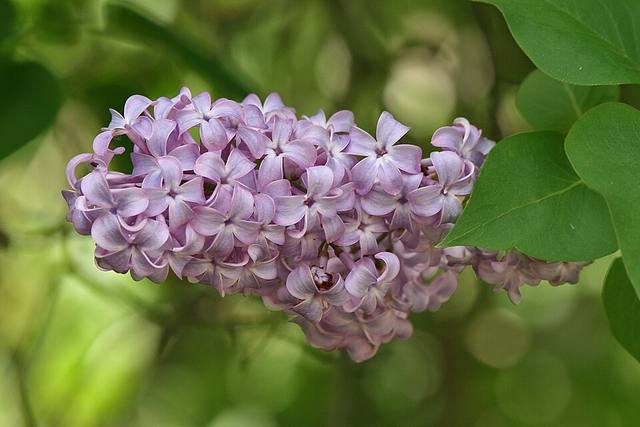
A large, hardy shrub with heavily scented purple, pink or white flower clusters in late spring. It is long lived and needs sun, chill and not much else.
Not on the ASPCA's list: keep it out of reach of pets.
Care
Light
Full sun
Needs full sun, at least 6 hours, to flower well. Shade gives plenty of leaves and few flowers. White powder on leaves in summer is common but harmless.
Water
About every 14 days in the growing season, every 28 in the cool season
Water new shrubs every 7 to 10 days in the first year. Established lilacs rarely need watering. Wet feet cause root rot.
Water when the top 5 cm (2 in) of soil is dry
Humidity
Medium humidity
Outdoor air is fine. Good air flow reduces mildew.
Temperature
5 to 28 °C (41 to 82 °F)
Hardy to about -35 °C (-31 °F) dormant. It needs a cold winter to flower and sulks in hot, mild climates. Best at 5 to 28 °C (41 to 82 °F).
Soil
Fertile, well-drained soil, neutral to slightly alkaline, pH 6.5 to 7.5. It dislikes acid, wet soil.
Feeding
Do not feed with nitrogen; it gives leaves, not flowers. A handful of compost or a little bone meal in spring is enough.
Repotting
Not repotted in the ground. A potted lilac needs a bigger pot every 3 years.
Pruning
Prune right after flowering, because next year's flowers form on this year's growth. Remove spent flowers, cut out a third of the oldest stems and suckers at the base.
Propagation
Dig up suckers from the base in autumn or spring and replant them. Own-root lilacs sucker freely; grafted ones may not.
Size
200 to 500 cm (79 to 197 in)
Medium growth
Outdoors
USDA zones 3 to 7
Hardy shrub for a sunny, well-drained spot, 3 to 4 m (10 to 13 ft) apart. It dislikes hot, humid summers. Flowers on 2-year-old wood.
Common problems
Few or no flowers
Too much shade, nitrogen or wrongly timed pruning
Give full sun, avoid feeding with nitrogen and prune right after flowering.
White powder on leaves
Powdery mildew
Prune for air flow and water at the base; it seldom harms the plant.
Dead flowers with brown spots
Bacterial blight or frost
Prune out affected shoots and clean tools.
Suckers all around
Natural habit
Dig out and replant, or remove at the base.
Leaves curled and chewed
Leaf miner or borer
Pick off affected leaves and check for sawdust at the base.
Did you know?
Common lilac was brought to Western gardens from the Balkans in the 1500s and some plants have survived on old farmsteads for more than a century.
General care information for a typical plant. Conditions in your home or garden may need a different rhythm.
Not sure what your plant is?
Identify a plant from a photoSee this guide in the appKagn Plants also keeps your own plants with watering reminders, and its plant doctor reads what is wrong with one.
Updated 22 November 2026.