Photo: VSA.bing · Public domain · Wikimedia Commons

Split-leaf philodendron
Thaumatophyllum bipinnatifidum
Also called Tree philodendron, Lacy tree philodendron, Selloum
Houseplant · Family Araceae · Native to Southern Brazil, Paraguay, Argentina
A big, upright plant with deeply cut, glossy leaves on a thick trunk that slowly builds. It makes a bold tropical statement in a bright room or a warm garden.
Toxic to cats and dogs
Toxic principle: Insoluble calcium oxalates
Signs: Oral irritation, pain and swelling of mouth, tongue and lips, excessive drooling, vomiting, difficulty swallowing
Care
Light
Bright, indirect light
Bright light without hard midday sun. Leaves that stretch on long, bare stalks mean too little light. Scorched brown patches mean sun is too strong. Give it floor space, because it reaches 1.5 m or more.
Water
About every 7 days in the growing season, every 14 in the cool season
Water well until it runs out of the pot, then empty the saucer. Large pots stay wet for a long time, so check deeper in big plants. Constant wet soil is the usual way it declines.
Water when the top 5 cm (2 in) of soil is dry
Humidity
Medium humidity
Average home air is fine. Brown leaf edges point to dry air by a heater or to uneven watering.
Temperature
16 to 28 °C (61 to 82 °F)
Keep it at 16 to 28 °C (61 to 82 °F). Growth stalls and leaves are damaged below about 10 °C (50 °F), so keep it away from cold windows.
Soil
A rich, airy potting mix with bark or perlite so water drains quickly. Use a heavy, stable pot with drainage holes because the plant gets top-heavy.
Feeding
Every 4 weeks in the growing season
Feed every 4 weeks from spring to early autumn with a balanced houseplant fertiliser at the label rate. Skip winter.
Repotting
Every 2 years
Repot every 2 years in spring into a pot 5 cm (2 in) wider. Once it is very large, refresh the top 5 cm (2 in) of soil instead.
Pruning
Cut off old, yellow or damaged leaves at the base with clean scissors. Do not cut the growing tip. Wear gloves, since the sap can irritate skin.
Propagation
Take an offset that has its own roots, or a trunk section with a node and aerial roots, and pot it in moist mix. Seed works but is slow.
Size
100 to 250 cm (39 to 98 in)
Medium growth
Outdoors
USDA zones 10 to 12
Grows outdoors in frost-free, warm gardens in part shade, with room to spread 1.5 m (5 ft). Elsewhere, keep it in a pot and bring it in for winter.
Common problems
Yellow lower leaves
Too much water or natural ageing
Let the top 5 cm dry before watering. Remove one or two old leaves; many yellow leaves at once means the roots are too wet.
Long bare stalks, small leaves
Too little light
Move to a brighter spot, away from direct hot sun.
Brown, crispy leaf edges
Dry air or irregular watering
Water on a steady schedule and keep it away from heaters. Trim the brown edges.
Brown spots with yellow rings
Leaf spot from wet leaves
Water the soil, not the leaves. Remove spotted leaves and give the plant more air.
Sticky leaves, tiny pests
Scale insects or mealybugs
Wipe leaves with a damp cloth and dab pests with a cotton bud dipped in rubbing alcohol. Check weekly.
Did you know?
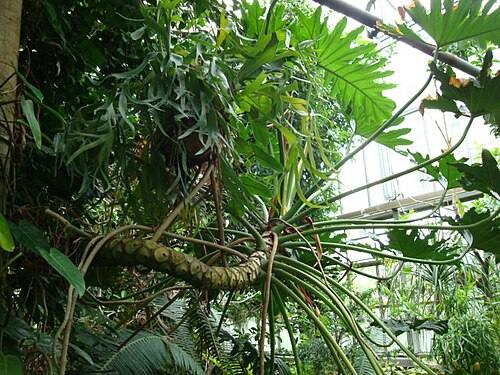
Older plants send out thick aerial roots and slowly lean over. In the wild the trunk can creep along the ground for metres before the crown turns up.
General care information for a typical plant. Conditions in your home or garden may need a different rhythm.
Not sure what your plant is?
Identify a plant from a photoSee this guide in the appKagn Plants also keeps your own plants with watering reminders, and its plant doctor reads what is wrong with one.
Updated 22 November 2026.