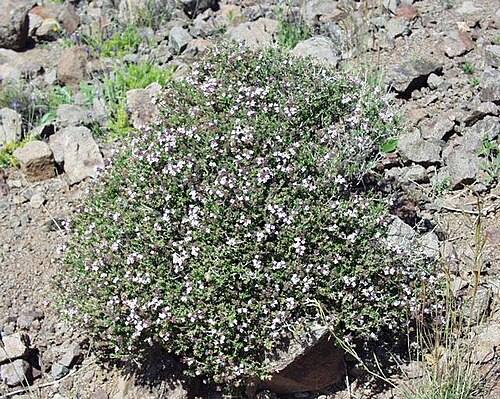
Photo: Henry Brisse (upload by user:Abalg) · CC BY-SA 3.0 · Wikimedia Commons

Thyme
Thymus vulgaris
Also called Common thyme, Garden thyme, English thyme
Herb · Family Lamiaceae · Native to Western Mediterranean (Spain, France, Italy)
A small, woody, evergreen herb with tiny, aromatic grey-green leaves. It is easy in a sunny, dry spot and a favourite with bees when it flowers.
The ASPCA lists this plant as non-toxic to cats and dogs
Care
Light
Full sun
Full sun, at least 6 hours, a south window indoors. In shade it grows leggy and loses its strong flavour.
Water
About every 10 days in the growing season, every 21 in the cool season
Water deeply and rarely. It comes from dry, rocky ground, and wet roots are the commonest killer. In the ground it rarely needs water once established.
Water when the top 3 cm (1 in) of soil is dry
Humidity
Low humidity
Dry air suits it; humid, still air brings fungus. Keep it airy.
Temperature
10 to 30 °C (50 to 86 °F)
Best at 10 to 30 °C (50 to 86 °F). Hardy to about -15 °C (5 °F) outside, if the soil is well drained.
Soil
Gritty, sandy, lean, well-drained soil, pH 6.5 to 8. In pots use cactus mix with extra grit and a terracotta pot.
Feeding
Little or no feeding: rich soil makes weak, bland growth. A weak feed once in spring is enough.
Repotting
Every 3 years
Repot every 2 to 3 years in spring when woody and crowded, in a pot just a bit larger. Divide older clumps.
Pruning
Trim lightly after flowering, and clip tips in spring. Do not cut into old bare wood, which may not regrow.
Propagation
Take 7 cm (3 in) tip cuttings in late spring or layer a stem. Root in gritty compost; roots form in 3 to 5 weeks. Seed is slow.
Size
15 to 40 cm (6 to 16 in)
Slow growing
Outdoors
USDA zones 5 to 9
Hardy in a sunny spot with sharp drainage, as a border edge, rockery or pot, 20 to 30 cm (8 to 12 in) apart.
Eating
Leaves and flowers
Common problems
Brown, woody centre
Old plant
Replace every 4 to 5 years, or take cuttings; trim lightly each year.
Yellow, wilting stems
Overwatering or poor drainage
Let it dry and move it to gritty, sunny soil.
Leggy, thin growth
Too little light
Move to full sun and trim the tips.
Leaves drop in winter
Cold, wet soil
Improve drainage and keep dry over winter.
White powder on leaves
Powdery mildew
Improve airflow and avoid wetting the leaves.
Did you know?
Thyme leaves hold thymol, the oil that gives thyme its sharp smell. It is also used as an ingredient in some mouthwashes and cleaners.
General care information for a typical plant. Conditions in your home or garden may need a different rhythm.
Not sure what your plant is?
Identify a plant from a photoSee this guide in the appKagn Plants also keeps your own plants with watering reminders, and its plant doctor reads what is wrong with one.
Updated 22 November 2026.