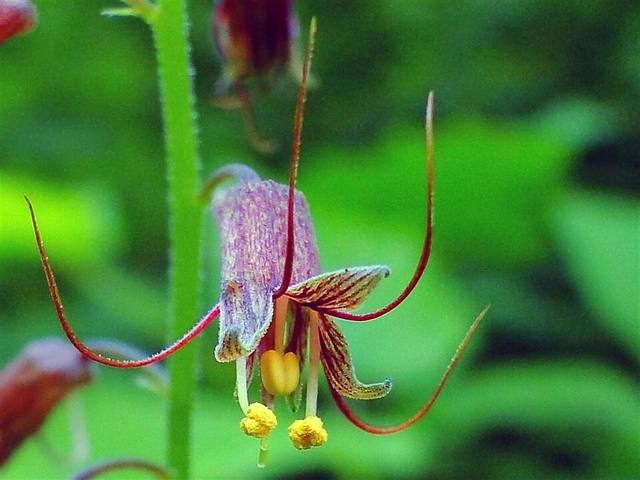
Photo: Digitalbcon1 · CC BY 2.0 · Wikimedia Commons

Piggyback plant
Tolmiea menziesii
Also called Pickaback plant, Youth on age, Mother of thousands
Houseplant · Family Saxifragaceae · Native to Pacific coast of North America
A cool-loving plant with soft, hairy, maple-like leaves that grow tiny new plants on the old leaves. It is easy in a cool bright room and also hardy outdoors in shade.
The ASPCA lists this plant as non-toxic to cats and dogs
Care
Light
Bright, indirect light
Bright light without direct sun. It likes a cool spot. In sun the leaves scorch and in deep shade they grow thin and dull.
Water
About every 5 days in the growing season, every 10 in the cool season
Keep the soil lightly moist and never soggy. It wilts quickly when dry but recovers if watered. Water about every 10 days in winter.
Water when the top 1 to 2 cm (0.5 to 1 in) of soil is dry
Humidity
Medium humidity
Normal home air is fine, though very dry, hot rooms give brown leaf edges.
Temperature
10 to 22 °C (50 to 72 °F)
Grows best at 10 to 22 °C (50 to 72 °F). It is a cool-climate plant and hot rooms above 27 °C (81 °F) stress it.
Soil
A light, peaty potting mix that drains well. Keep it slightly acid.
Feeding
Every 4 weeks in the growing season
Feed every 4 weeks in spring and summer with a balanced liquid feed at half strength. Skip it in winter.
Repotting
Every 2 years
Repot every 1 to 2 years in spring. Old plants get woody, so replace with plantlets.
Pruning
Cut off old and tired leaves at the base. Remove any that lie flat on the soil.
Propagation
Pin a leaf with a plantlet on it onto moist compost and keep it damp. The plantlet roots in a few weeks and can then be cut free.
Size
20 to 40 cm (8 to 16 in)
Medium growth
Outdoors
USDA zones 7 to 9
Grows in part shade to shade in damp, cool, woodland-like ground, and is grown as a hardy ground cover in mild temperate gardens.
Common problems
Brown, crisp leaf edges
Hot, dry air
Move to a cooler room and raise humidity.
Leaves wilt, then yellow
Overwatering or drying out
Water when the top 1 to 2 cm (0.5 to 1 in) is dry and drain well.
Pale, scorched leaves
Direct sun
Move it out of direct sun.
White powder on leaves
Powdery mildew
Improve airflow and avoid wetting leaves.
Fine webbing and speckles
Spider mites in dry, hot air
Rinse the leaves and raise humidity.
Did you know?
New baby plants grow at the base of each leaf blade and are formed on the parent plant itself, which is why it is called the piggyback plant.
General care information for a typical plant. Conditions in your home or garden may need a different rhythm.
Not sure what your plant is?
Identify a plant from a photoSee this guide in the appKagn Plants also keeps your own plants with watering reminders, and its plant doctor reads what is wrong with one.
Updated 22 November 2026.