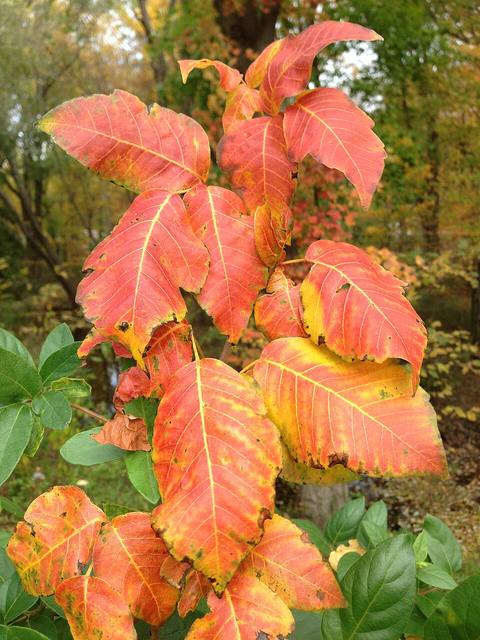
Photo: Famartin · CC BY-SA 4.0 · Wikimedia Commons

Poison ivy
Toxicodendron radicans
Also called Eastern poison ivy, Climbing poison ivy
Lawn weed · Family Anacardiaceae · Native to Eastern North America; also found in eastern Asia
A vine or low shrub with three leaflets that touches off a painful, itchy rash in most people. It grows along fences, trees and paths, and the safe choice is to learn to spot it and avoid it.
The ASPCA lists this plant as non-toxic to cats and dogs
Care
Light
Part sun
Grows in sun, part shade and woodland edges, and climbs tree trunks and fences. It fruits most in good light.
Water
About every 14 days in the growing season, every 28 in the cool season
It needs no care and survives dry spells in poor soil. Do not water it or try to move it. Stay away from the plant and its leaves.
Not needed: it grows on rain in woods, fences and edges
Humidity
Medium humidity
Normal outdoor humidity is fine. It grows from damp woods to dry roadsides.
Temperature
12 to 30 °C (54 to 86 °F)
Grows best at 12 to 30 °C (54 to 86 °F). It loses its leaves in autumn, often turning red, and hardy stems survive to about -30 °C (-22 °F).
Soil
Grows in a wide range of soils, from sand to clay, in dry or damp places. It is common on woodland edges and fence lines.
Feeding
Do not feed it. Do not cut it back for cuttings or compost.
Repotting
Nothing to repot. It spreads by roots and by birds eating the berries.
Pruning
Do not cut it, burn it or mow it without protection. Burning spreads the oil in smoke. Wear long sleeves, gloves and eye protection when you clear it, and wash tools and clothes after.
Propagation
Do not propagate it. It spreads by seed carried by birds and by roots. All parts, even dead stems in winter, carry the irritant oil.
Size
20 to 2000 cm (8 to 787 in)
Medium growth
Outdoors
USDA zones 3 to 10
Common across much of the US and southern Canada along fences, trails and woods. Leaves of three: let it be, and remove it only with protection.
Common problems
Leaves in threes, shiny, notched
Poison ivy
Do not touch it. If you must clear it, wear gloves, long sleeves and eye protection, and wash everything after.
Skin rash after gardening
Contact with the oil (urushiol)
Rinse skin and clothes in cool water as soon as you can. Wash tools. See a pharmacist or doctor if it spreads or the face is affected.
It comes back after pulling
Roots left behind
Dig out the roots with gloves, or cut and keep cutting stems. Repeat for a season.
Burning the vines made it worse
Oil in smoke
Never burn it. Bag it and put it in the bin as local rules say.
Pet or tools carried the oil
Oil on fur or handles
Wash the pet with soap and gloves, and wash tools and clothes.
Did you know?
The rash does not come from the plant being poisonous to eat but from an oil called urushiol, which stays active on tools, clothes and pet fur for months.
General care information for a typical plant. Conditions in your home or garden may need a different rhythm.
Not sure what your plant is?
Identify a plant from a photoSee this guide in the appKagn Plants also keeps your own plants with watering reminders, and its plant doctor reads what is wrong with one.
Updated 22 November 2026.