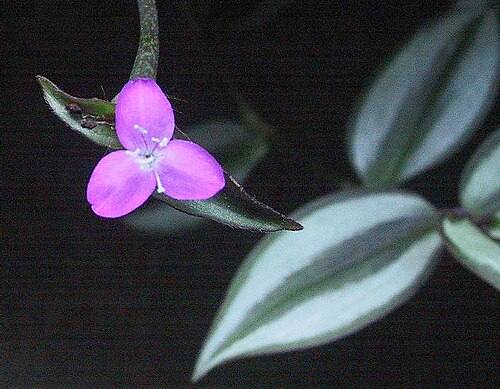
Photo: Ruestz (upload 13:54, 11 January 2008) · CC BY-SA 3.0 · Wikimedia Commons

Wandering jew
Tradescantia zebrina
Also called Inch plant, Silver inch plant, Zebrina
Houseplant · Family Commelinaceae · Native to Mexico, Central America and Colombia
A fast, trailing plant with purple-and-silver striped leaves. It grows easily from any cutting, which is why it is passed from friend to friend.
The ASPCA lists a close relative, inch Plant (Tradescantia flumeninsis), as toxic to cats and dogs: treat this plant the same.
Care
Light
Bright, indirect light
Bright indirect light, with a little direct sun. The silver stripes and purple underside fade in low light. Harsh midday sun scorches leaves.
Water
About every 7 days in the growing season, every 12 in the cool season
Water well, then let the top dry a little. It likes even moisture but rots in soggy soil. Wrinkled stems and leaves mean thirst.
Water when the top 3 cm (1 in) of soil is dry
Humidity
Medium humidity
Normal home humidity is fine. Brown tips mean dry air or thirst.
Temperature
15 to 28 °C (59 to 82 °F)
Keep at 15 to 28 °C (59 to 82 °F). It is damaged below about 10 °C (50 °F).
Soil
Any light, well-draining potting mix. The pot needs drainage holes. It is not fussy about soil.
Feeding
Every 4 weeks in the growing season
Feed every 4 weeks in spring and summer with a half-strength fertiliser. Do not feed in winter.
Repotting
Every 2 years
Repot every 2 years or replace it with new cuttings, as plants get leggy with age.
Pruning
Pinch the tips often to keep it full. Cut long, bare stems back hard in spring; it regrows fast.
Propagation
Cut stems 8 to 10 cm (3 to 4 in) long below a node and root them in water or damp mix in 1 to 2 weeks. Plant several cuttings together for a fuller pot.
Size
15 to 40 cm (6 to 16 in)
Fast growing
Outdoors
USDA zones 9 to 11
Grows outdoors as a ground cover in shade or part sun, in mild climates. It can spread and become invasive in warm regions.
Common problems
Long, bare stems
Low light or age
Pinch tips, cut back hard and give brighter light.
Faded stripes, green leaves
Not enough light
Move to a brighter spot.
Brown, crispy leaf tips
Dry air or thirst
Water more evenly.
Soft, brown stems
Overwatering
Take cuttings from healthy tips and repot in fresh mix.
Webbing, speckled leaves
Spider mites
Rinse the plant and raise humidity.
Did you know?
The leaf undersides are deep purple, and the silver stripes are not pigment: they are air spaces between layers of the leaf that scatter light.
General care information for a typical plant. Conditions in your home or garden may need a different rhythm.
Not sure what your plant is?
Identify a plant from a photoSee this guide in the appKagn Plants also keeps your own plants with watering reminders, and its plant doctor reads what is wrong with one.
Updated 22 November 2026.