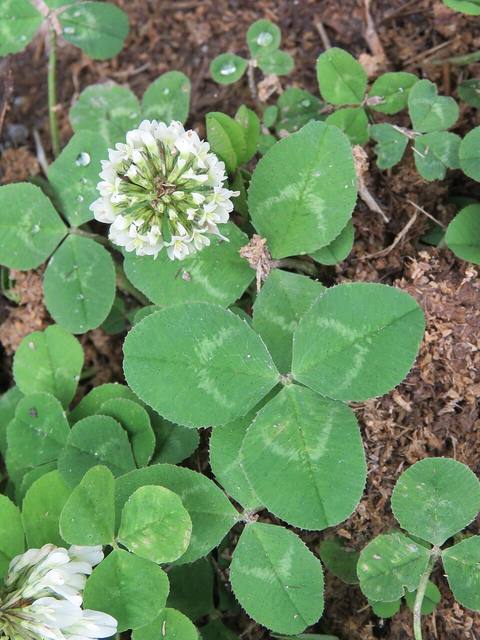
Photo: Vinayaraj · CC BY-SA 4.0 · Wikimedia Commons

White clover
Trifolium repens
Also called Dutch clover, Shamrock, Ladino clover
Lawn weed · Family Fabaceae · Native to Europe and western Asia
A low creeping plant with three-part leaves, often marked with a pale V, and round white flower heads. It feeds bees and adds nitrogen to soil, so many people leave it in the lawn.
Not on the ASPCA's list: keep it out of reach of pets.
Care
Light
Full sun
Grows in full sun to light shade. It forms thick mats in sun. It thins out in deep shade.
Water
About every 10 days in the growing season, every 30 in the cool season
Not watered on purpose. It tolerates mowing and foot traffic and stays green in dry spells better than most lawn grasses. Winter figure is for a dormant, cold-season plant.
Rarely needs water; it greens up again after rain
Humidity
Medium humidity
Average air is fine. It thrives in ordinary outdoor conditions.
Temperature
10 to 25 °C (50 to 77 °F)
Hardy to about -30 °C (-22 °F). It grows best at 10 to 25 °C (50 to 77 °F) and dies back in hard frost, then regrows.
Soil
Almost any soil, including poor, compacted and acid ones. It does best in moist, fertile ground. Its roots host bacteria that add nitrogen to the soil.
Feeding
Not fed. Lawn feed that is rich in nitrogen helps grass beat clover, which is one way to reduce it.
Repotting
Nothing to repot. Remove by hand, or let it be.
Pruning
Keep it by mowing at 5 to 8 cm (2 to 3 in), or remove it. To remove, rake out the creeping stems, dig out patches and overseed, and feed the grass with nitrogen.
Propagation
It spreads by creeping stems that root as they go, and by seed. To sow it on purpose, scatter seed in spring over bare ground and rake it in.
Size
5 to 20 cm (2 to 8 in)
Fast growing
Outdoors
USDA zones 3 to 10
Common in lawns, verges and meadows across most of the temperate world. It tolerates cutting down to 3 cm (1 in) and keeps flowering below the blades.
Eating
Leaves and flowers
Pick only from lawns that have not been sprayed and where dogs do not go.
Common problems
It takes over the lawn
Low fertility and short grass
Feed the grass with a nitrogen lawn feed, mow higher and overseed bare spots.
It returns after being pulled
Creeping stems left behind
Remove all the stems and roots, and fill the gap with grass seed.
Bees all over lawn flowers
Flowers attract bees
Mow before flowers open if you play there barefoot, or leave patches for bees.
Dying patches after weedkiller
Sprays that kill grass too
Hand-weed small patches. Avoid broad sprays on lawns.
Brown patches in a dry summer
Drought
It often regrows after rain. Water deeply if needed.
Did you know?
Clover roots host bacteria that take nitrogen from the air and feed the plant, which is why old lawn seed mixes included it.
General care information for a typical plant. Conditions in your home or garden may need a different rhythm.
Not sure what your plant is?
Identify a plant from a photoSee this guide in the appKagn Plants also keeps your own plants with watering reminders, and its plant doctor reads what is wrong with one.
Updated 22 November 2026.