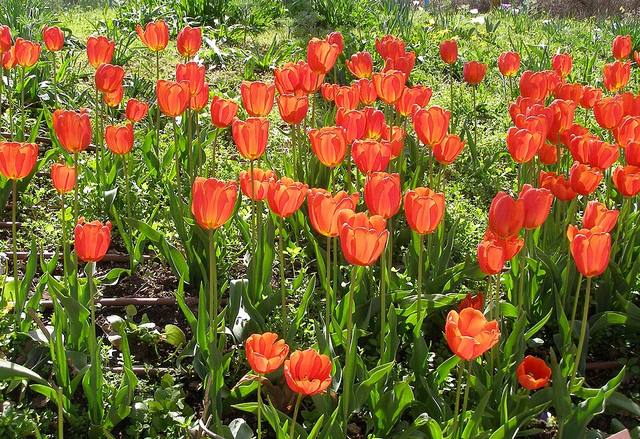
Photo: Dina L · CC0 · Wikimedia Commons

Tulip
Tulipa
Also called Garden tulip
Garden flower · Family Liliaceae · Native to Central Asia to the Mediterranean
A spring bulb with cup-shaped flowers in nearly every colour. Plant bulbs in autumn for flowers the next spring.
Toxic to cats and dogs
Toxic principle: Tulipalin A and B
Signs: Vomiting, depression, diarrhea, drooling. ASPCA: the bulb has the highest toxin concentration
Care
Light
Full sun
Full sun to light shade in spring when it grows. Leaves are tolerant of tree shade before the trees leaf out.
Water
About every 7 days in the growing season, every 14 in the cool season
Water after planting, then only in dry spells in spring. Bulbs need a dry rest in summer: wet summer soil rots them.
Water only if spring is dry and the soil is dry 5 cm (2 in) down
Humidity
Low humidity
Prefers dry air and dry summers. Wet, humid weather encourages fungus.
Temperature
5 to 18 °C (41 to 64 °F)
Grows best at 5 to 18 °C (41 to 64 °F). Needs 12 to 14 weeks of cold below 9 °C (48 °F) to flower. Hardy to about -30 °C (-22 °F).
Soil
Well-drained soil, sandy or loamy, pH 6 to 7. Soggy soil is the commonest cause of bulb loss. Plant 15 cm (6 in) deep.
Feeding
Add bone meal or balanced fertiliser at planting or when shoots appear. Feed after flowering until the leaves die back.
Repotting
Every 3 years
Lift and divide crowded bulbs every 3 to 4 years after leaves die back; many hybrids flower less after year 2 anyway.
Pruning
Deadhead after flowering but leave the leaves until they yellow, so the bulb stores energy for next year.
Propagation
Divide the small offset bulbs when you lift the clump in summer and replant in autumn. They take 2 to 3 years to flower.
Size
15 to 70 cm (6 to 28 in)
Medium growth
Outdoors
USDA zones 3 to 8
Plant bulbs 10 to 15 cm (4 to 6 in) apart in autumn, pointed end up, in sun and sharp drainage.
Common problems
No flowers in year 2
Bulbs used up or leaves cut early
Leave leaves until they yellow and feed after flowering.
Bulbs rotted
Wet soil in summer
Plant in sharply drained soil or lift in summer.
Grey fuzzy mould on leaves
Tulip fire (Botrytis)
Remove infected plants and do not plant tulips in the same spot for 3 years.
Bulbs eaten
Squirrels, voles and mice
Plant deeper or cover with mesh.
Short, weak stems
Too warm or too little light
Plant in a cooler, sunnier spot.
Did you know?
In the 1630s tulip bulbs sold in Dutch 'tulip mania' for more than the price of a house, and some bulbs were swapped for large amounts of goods.
General care information for a typical plant. Conditions in your home or garden may need a different rhythm.
Not sure what your plant is?
Identify a plant from a photoSee this guide in the appKagn Plants also keeps your own plants with watering reminders, and its plant doctor reads what is wrong with one.
Updated 22 November 2026.