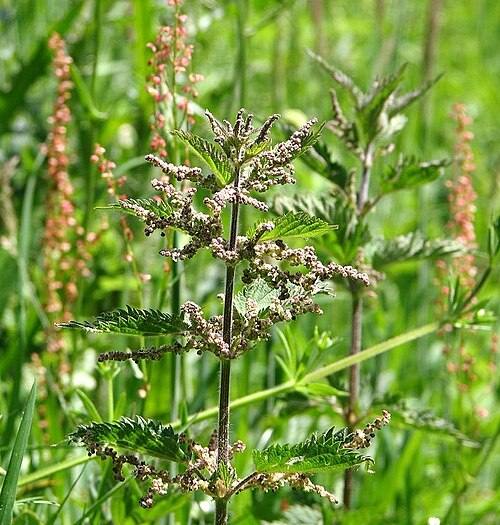
Photo: Evelyn Simak · CC BY-SA 2.0 · Wikimedia Commons

Stinging nettle
Urtica dioica
Also called Common nettle, Nettle, Burn nettle
Lawn weed · Family Urticaceae · Native to Europe, Asia, north Africa; widespread elsewhere
A tall perennial with toothed leaves covered in stinging hairs. It grows in rich, damp soil and is useful to butterflies and for cooking, so keep a corner or remove it with gloves.
Not on the ASPCA's list: keep it out of reach of pets.
Care
Light
Part sun
Grows in sun or part shade, and is often thickest at the edge of a wood or hedge. Dense stands in full shade grow weaker.
Water
About every 7 days in the growing season, every 21 in the cool season
It takes care of itself in damp soil. In a dry summer it wilts but recovers. It marks ground that is rich in nitrogen and often damp, so do not water it.
Not needed: it grows where the soil stays damp
Humidity
Medium humidity
Normal outdoor humidity is fine. It does best in moist places.
Temperature
10 to 25 °C (50 to 77 °F)
Grows best at 10 to 25 °C (50 to 77 °F). Frost kills the tops in winter, but the roots are hardy to about -25 °C (-13 °F).
Soil
Rich, moist, fertile soil, often near compost, manure or streams. It needs a lot of nitrogen and phosphate and thins out on poor, dry ground.
Feeding
Do not feed it. It lives on rich soil. To weaken it, stop adding manure, and remove cuttings from the area.
Repotting
Nothing to repot. It spreads by creeping roots, so dig out the yellow roots to remove a patch.
Pruning
Wear gloves and long sleeves. Cut stems to the ground before they flower to stop seed. Cutting 2 to 3 times in a season weakens the patch. Dig out the yellow roots for a real clearance.
Propagation
It spreads by creeping yellow roots (rhizomes) and by seed. To start a patch for butterflies, sow seed on bare soil in spring or move a root piece in autumn.
Size
50 to 150 cm (20 to 59 in)
Fast growing
Outdoors
USDA zones 3 to 10
Common in meadows, hedgerows and neglected corners. It spreads by roots. Butterfly caterpillars feed on it, so a small patch in a sunny corner is worth keeping.
Eating
Young leaf tips, cooked
Raw leaves sting, so wear gloves to pick them. Use only young leaves from clean ground, and cook them to remove the sting. Old plants in seed are not for eating.
Common problems
Stinging skin after touching leaves
Stinging hairs
Wear gloves. Rub the area with a dock leaf if you like, or rinse with cool water. The sting fades in an hour or two.
Patch spreads into the lawn or bed
Creeping roots
Dig out the yellow roots with a fork and bin them. Mow the lawn weekly and the stems cannot grow.
It regrows after cutting
Roots left in the soil
Cut again before it reaches 30 cm (12 in) and keep going for a season. Digging out roots is faster.
Nettles come up again from seed
Seed in the soil
Cut before the green flower tassels open in early summer, and mulch bare soil.
Patch is thick and tall
Rich soil and no mowing
Cut it and take away the cuttings. Do not add manure or compost near the patch.
Did you know?
Stinging hairs inject a mix of chemicals when brushed, but boiling or drying the leaves disarms them, which is why people have eaten nettle soup for centuries.
General care information for a typical plant. Conditions in your home or garden may need a different rhythm.
Not sure what your plant is?
Identify a plant from a photoSee this guide in the appKagn Plants also keeps your own plants with watering reminders, and its plant doctor reads what is wrong with one.
Updated 22 November 2026.