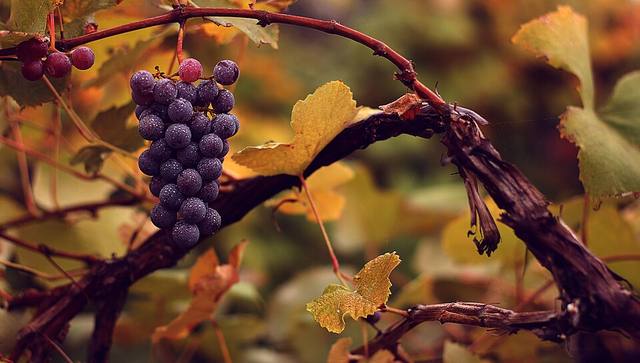
Photo: eflon (Alex from Ithaca, NY) · CC BY 2.0 · Wikimedia Commons

Grape vine
Vitis vinifera
Also called Grapevine, Wine grape, Common grape
Shrub · Family Vitaceae · Native to Mediterranean to Central Asia
A woody climbing vine grown for sweet fruit, wine and shade over a wall or pergola. It needs sun, heat and yearly pruning, and takes 3 years to crop.
Not on the ASPCA's list: keep it out of reach of pets.
Care
Light
Full sun
Needs full sun and a warm, sheltered spot, such as a south-facing wall. Shade gives sour, mouldy fruit. Leaves that scorch brown at the edges mean water stress.
Water
About every 14 days in the growing season, every 28 in the cool season
Water new vines weekly in dry spells for the first 2 years. Established vines mostly look after themselves. Too much water after fruit sets dilutes the sugar and splits berries.
Water when the top 5 cm (2 in) of soil is dry
Humidity
Low humidity
Dry air is fine. Humid, wet summers bring mildew and rot.
Temperature
15 to 32 °C (59 to 90 °F)
Hardy to about -18 °C (0 °F) when dormant; buds are damaged by late spring frost below -2 °C (28 °F). Grows best at 15 to 32 °C (59 to 90 °F).
Soil
Deep, well-drained, moderately fertile soil, pH 6 to 7. It copes with poor, stony soil. Avoid waterlogged clay.
Feeding
Do not feed in a normal garden. Mulch with compost in spring. Too much nitrogen gives leaves, not fruit.
Repotting
Not repotted: plant out and train it. For pots, repot every 3 years in winter and refresh the top soil.
Pruning
Prune hard in winter while dormant, to 2 or 3 buds per shoot, since fruit forms on new shoots. Pruning in spring makes the plant bleed. Thin bunches in summer.
Propagation
Take 30 cm (12 in) hardwood cuttings in winter, 3 buds each, and root in the ground or a deep pot. Buy a named grafted variety that suits your climate.
Size
200 to 600 cm (79 to 236 in)
Fast growing
Outdoors
USDA zones 6 to 10
Grows outdoors against a sunny wall or pergola; choose a variety suited to your summer heat. Plant 1.5 to 2 m (5 to 6 ft) apart.
Eating
Ripe grapes
Grapes and raisins are widely reported as dangerous to dogs; keep fruit away from pets. The ASPCA plant list has no entry for this vine.
Common problems
White powder on leaves and fruit
Powdery mildew
Prune for air flow, water at the base and remove affected parts.
Rotting, grey mould on bunches
Botrytis in damp weather
Thin bunches, remove leaves around fruit and pick off affected berries.
Small, sour berries
Too little sun or heat
Choose a sunnier spot and thin the bunches.
Vine bleeds sap after pruning
Pruned in spring
Prune only in winter while the vine is dormant.
Leaves yellow with green veins
Lime-induced chlorosis
Use iron chelate and a lower soil pH or grow in a pot with ericaceous mix.
Did you know?
Grape vines can live and crop for over a century, and the oldest known vine in Slovenia is more than 400 years old.
General care information for a typical plant. Conditions in your home or garden may need a different rhythm.
Not sure what your plant is?
Identify a plant from a photoSee this guide in the appKagn Plants also keeps your own plants with watering reminders, and its plant doctor reads what is wrong with one.
Updated 22 November 2026.