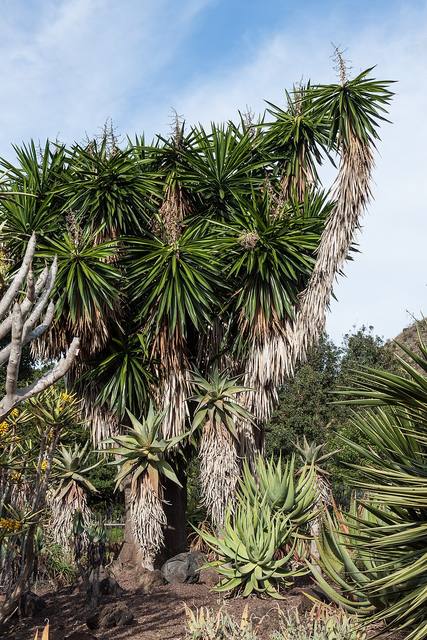
Photo: H. Zell · CC BY-SA 3.0 · Wikimedia Commons

Spineless yucca
Yucca gigantea
Also called Yucca, Giant yucca, Soft-tip yucca
Houseplant · Family Asparagaceae · Native to Mexico and Central America
A tree-like plant with one or more thick trunks, topped by a rosette of long, sword-shaped leaves with no sharp spines. It is a hardy, drought-proof houseplant that suits a bright room.
Toxic to cats and dogs
Toxic principle: Saponins
Signs: Dogs, cats: vomiting; horses: liver disease, dermatitis
Care
Light
Full sun
The brightest spot you can give it, with direct sun for part of the day. In low light it grows weak and thin. Move it into strong sun gradually.
Water
About every 14 days in the growing season, every 28 in the cool season
Soak the pot, let it drain, and wait until it is fully dry. It stores water in the trunk. Wet soil rots the trunk base, and this is the commonest way to kill one.
Water when the soil is dry all the way down
Humidity
Low humidity
Dry home air is fine.
Temperature
10 to 32 °C (50 to 90 °F)
Grows at 10 to 32 °C (50 to 90 °F). Older plants outdoors take brief frost to about -5 °C (23 °F). Keep young and potted plants frost-free.
Soil
A fast-draining cactus or succulent mix with extra grit, in a heavy pot with drainage holes.
Feeding
Every 8 weeks in the growing season
Feed every 8 weeks in spring and summer with a half-strength feed. Do not feed in winter.
Repotting
Every 3 years
Repot every 3 to 4 years in spring, into a heavy pot only slightly bigger. It likes being snug.
Pruning
Cut off dead lower leaves at the base. A tall cane can be cut at any height in spring, and it sprouts new rosettes below the cut.
Propagation
Cut a cane into pieces 20 cm (8 in) or more long and let them dry for a day. Stand them upright in damp, gritty mix, and keep them warm. Roots take a few weeks to months.
Size
100 to 300 cm (39 to 118 in)
Slow growing
Outdoors
USDA zones 9 to 11
Grows outdoors in full sun in dry, frost-free climates. Elsewhere keep it in a pot and bring it indoors for winter.
Common problems
Soft, squashy trunk base
Overwatering and rot
Stop watering. If the base is mushy, cut healthy cane pieces to root and discard the rotten part.
Brown leaf tips
Dry soil, salts or fluoride in tap water
Water deeply and less often, use rainwater, and trim the tips.
Yellowing lower leaves
Normal ageing or overwatering
Remove old leaves. Let the soil dry further between waterings.
Long, floppy new growth
Low light
Move to a sunnier spot.
Brown, sticky bumps on leaves
Scale insects
Wipe off with a cloth dipped in soapy water, and repeat weekly.
Did you know?
Spineless yucca is also called Yucca elephantipes because its thick trunk resembles an elephant's foot. It is a popular palm-like houseplant that has no sharp tip.
General care information for a typical plant. Conditions in your home or garden may need a different rhythm.
Not sure what your plant is?
Identify a plant from a photoSee this guide in the appKagn Plants also keeps your own plants with watering reminders, and its plant doctor reads what is wrong with one.
Updated 22 November 2026.