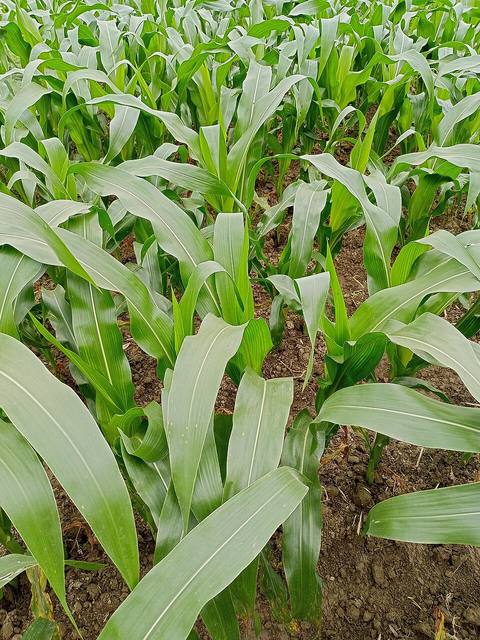
Photo: Hopeoflight · CC0 · Wikimedia Commons

Sweetcorn
Zea mays
Also called Corn, Maize, Sweet corn
Vegetable · Family Poaceae · Native to Southern Mexico
A tall, warm-season cereal grown for sweet cobs eaten fresh. It needs summer heat, sun and lots of water, and is easy once the soil is warm.
Not on the ASPCA's list: keep it out of reach of pets.
Care
Light
Full sun
Needs full sun and shelter from wind. In shade it grows thin and cobs are poor. Pale leaves usually mean too little feed or too cold.
Water
About every 4 days
Water deeply, most when tassels show and cobs swell. Dry spells mean missing kernels. It is an annual, so winter_days equals summer_days; it is not alive in winter.
Water when the top 4 cm (1.5 in) of soil is dry
Humidity
Medium humidity
Outdoor air is fine. Warm humid summers suit it.
Temperature
15 to 32 °C (59 to 90 °F)
Killed by frost; damage begins below about 5 °C (41 °F). Sow when soil is above 12 °C (54 °F). Grows best at 18 to 32 °C (64 to 90 °F).
Soil
Rich, well-drained soil with plenty of compost, pH 6 to 7. It is a hungry crop and needs a sunny, sheltered bed.
Feeding
Every 3 weeks in the growing season
Feed every 3 weeks with a nitrogen-rich fertiliser until tassels show, then switch to a balanced feed.
Repotting
Not repotted: sow where it will grow, or in pots and plant out after frost. Plant in blocks, not a single row.
Pruning
No pruning. Do not remove the side shoots; they do not harm the cob. Harvest when silks go brown and a kernel squirts milky juice.
Propagation
Sow seeds 3 cm (1 in) deep, 25 to 30 cm (10 to 12 in) apart in a block, after frost. Blocks pollinate better than long rows.
Size
120 to 250 cm (47 to 98 in)
Fast growing
Outdoors
USDA zones 3 to 11
Annual, in a sunny sheltered block of at least 3 by 3 plants. Hill soil around stems in wind. Keep sweetcorn away from other types, which cross with it.
Eating
Cobs (kernels), picked young and cooked soon after picking
Sugars start turning to starch within hours of picking, so eat or cook quickly.
Common problems
Cobs with missing kernels
Poor pollination or drought
Plant in blocks and water well when tassels and silks show.
Pale, stunted plants
Cold soil or hunger
Wait for warm soil, then feed with nitrogen.
Large grey-white swollen galls
Corn smut
Cut them off and bin; they are edible in Mexico but spread spores.
Cobs eaten or knocked down
Birds, mice, badgers or wind
Net cobs, fence the patch and hill soil around the stems.
Starchy, tough kernels
Picked late
Pick as soon as silks are brown and juice is milky.
Did you know?
Maize was bred from a wild grass called teosinte in Mexico about 9,000 years ago; each silk strand is attached to one kernel.
General care information for a typical plant. Conditions in your home or garden may need a different rhythm.
Not sure what your plant is?
Identify a plant from a photoSee this guide in the appKagn Plants also keeps your own plants with watering reminders, and its plant doctor reads what is wrong with one.
Updated 22 November 2026.