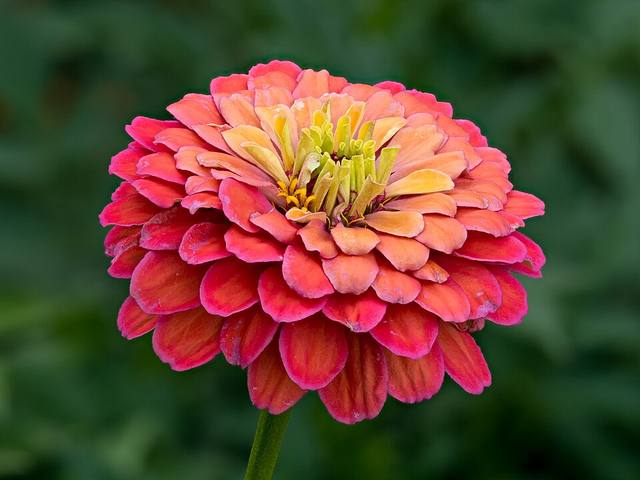
Photo: Ermell · CC BY-SA 4.0 · Wikimedia Commons

Zinnia
Zinnia elegans
Also called Common zinnia, Youth-and-old-age
Garden flower · Family Asteraceae · Native to Mexico
A fast annual with bright, daisy-like flowers on stiff stems. It is one of the easiest flowers from seed and a good cut flower for summer.
The ASPCA lists this plant as non-toxic to cats and dogs
Care
Light
Full sun
Needs full sun, at least 6 hours. In shade it gets mildew and flowers poorly.
Water
About every 5 days
Annual, so winter matches summer. Water deeply at the base and keep leaves dry. Wet leaves are the usual start of mildew. Tolerates short dry spells.
Water when the top 3 cm (1 in) of soil is dry
Humidity
Low humidity
Hot, dry air is fine. Damp, still air and wet leaves invite mildew.
Temperature
18 to 30 °C (64 to 86 °F)
Grows best at 18 to 30 °C (64 to 86 °F). It dislikes cold. Frost kills it and cool, wet soil stunts seedlings.
Soil
Average to rich, well-drained soil in a sunny spot. Good drainage is more important than richness.
Feeding
Every 4 weeks in the growing season
Feed every 4 weeks with a diluted flower feed. Excess nitrogen gives leaves instead of flowers.
Repotting
Not repotted. Sow new seed each spring after the last frost.
Pruning
Pinch out the top of a young plant when 20 cm (8 in) tall for more branches. Cut faded flowers to keep it going. Cutting flowers makes it flower more.
Propagation
Sow seed directly outdoors after the last frost, 1 cm (0.5 in) deep. It germinates in 4 to 7 days and flowers in 6 to 8 weeks. Do not transplant when big.
Size
30 to 90 cm (12 to 35 in)
Fast growing
Outdoors
USDA zones 2 to 11
Grown as an annual. Space plants 20 to 30 cm (8 to 12 in) apart in full sun, with space for air flow.
Common problems
White powder on leaves
Powdery mildew
Water at the base, give more space and plant in full sun. Pull badly hit plants.
Seedlings fall over at soil level
Damping off from cold, wet soil
Sow after the soil warms and do not overwater.
Brown spots with yellow edges
Fungal leaf spot
Remove affected leaves and keep foliage dry.
Leggy, few flowers
Shade or too much feed
Move to full sun. Pinch back and stop feeding.
Petals chewed
Japanese beetles or earwigs
Pick insects off by hand in the morning.
Did you know?
Zinnias were the first flowers grown to bloom in space, on the International Space Station in 2016.
General care information for a typical plant. Conditions in your home or garden may need a different rhythm.
Not sure what your plant is?
Identify a plant from a photoSee this guide in the appKagn Plants also keeps your own plants with watering reminders, and its plant doctor reads what is wrong with one.
Updated 22 November 2026.